Reflections by Day

April 2026
Su Mo Tu We Th Fr Sa
29 30 31 1 2 3 4
5 6 7 8 9 10 11
12 13 14 15 16 17 18
19 20 21 22 23 24 25
26 27 28 29 30 1 2

Audio/Video Resources

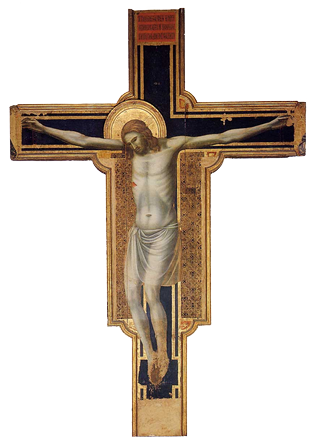
ExultCrossWriting to the Corinthians, who were being bewitched by eloquence and a rather comfortable way of living, Paul tells them: “Christ did not send me to baptize, but to preach the gospel-not with wisdom and eloquence, lest the cross of Christ be emptied of its power. For the word of the cross is foolishness to those who are perishing, but to us who are being saved it is the power of God.” (1Co 1:17-18)

The phrase “the word of the cross” refers to that preaching which makes the reality of the cross present and available in power to those who receive it with an open heart. It is the verbal dimension of the reality mediated by baptism as Paul describes it to the Romans:

“Are you unaware that we who were baptized into Christ Jesus were baptized into his death? So then, we were buried with him through baptism into death so that just as Christ was raised from the dead through the glory of the Father so too, we also might walk in newness of life. For if we have become vital sharers [with him] by the likeness of his death, then certainly we will be [vital sharers] of the resurrection.” (Rom 6: 3-5).

On the feast of Pentecost the Church recalls that, at the liturgy, this invitation of Jesus which, is not a vague recalling of a past event but the making present of the same event. As Pope St. Leo reminds us: “All those things which the Son of God both did and taught for the reconciliation of the world, we not only know in the account of things now past, but we also experience in the power of works which are present.” (Twelfth Homily on the Passion). This same teaching is repeated in the Vatican II document on the Liturgy: "Christ is present in His word, since it is He Himself who speaks when the Holy Scriptures are read in the Church.” (Document on the Liturgy, #7).

When we go to Mass on Pentecost Sunday, pay close attention with the “ears of your heart” so that the Lord can work within you a repetition of the gift of Pentecost. St. Peter’s speech, which we hear at the First Reading, reminds us that: "This Jesus God raised up again, to which we are all witnesses. Therefore having been exalted to the right hand of God, and having received from the Father the promise of the Holy Spirit, He has poured forth that which you both see and hear.” (Acts 2:33). May all of us receive this outpouring of the Holy Spirit both for ourselves and our families and for all to whom we can impart an account of our experience.

FFMSig

(09/2013)

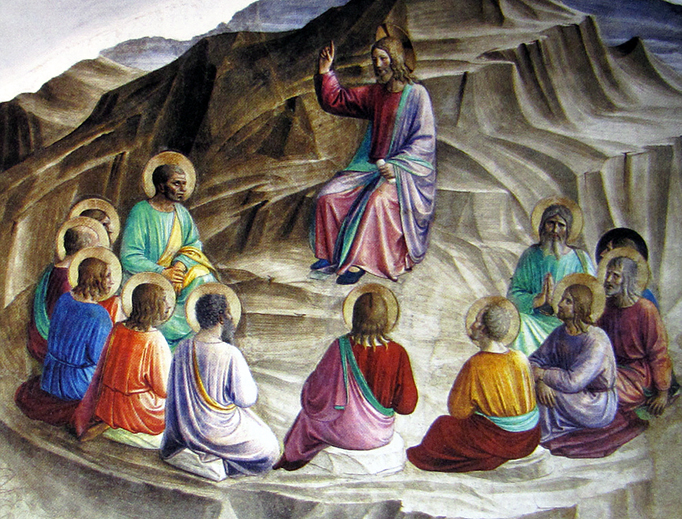
Beatitudes ArmstrongD SERMONONTHEMOUNTAs I prepared a presentation some years ago on the Beatitudes, Christmas had been in the background of my thought. The Beatitudes mark the frontier between history and eschatology. They accent the biblical vision of peripateia or “reversal.” We see a newborn child laid in the feeding stall of beasts and then described as the reason for “good tidings of great joy.” The Beatitudes are Jesus’ description and promise of that reversal between what seems to be and what really is and will be, thus between what seems to be good in our blunted vision of reality and what is good now already and will be eternally. As Saint John Paul II once expressed it: “Indeed, each of the Beatitudes promises, from a particular viewpoint, that very ‘good’ which opens man up to eternal life, and indeed is eternal life.” (Veritatis Splendor #16). If we reflect on the mystery of Christmas as expressing the Christian life in all its paradoxical practicality, we will be led to understand the message of the Beatitudes.

Henri de Lubac once wrote: “Paradox is the reverse of what, properly perceived, would be synthesis… Paradox is the search or wait for synthesis.” The Greek word paradoxos can evoke the notion of something strange, wonderful, or remarkable (ex. gr. Lk 5:26). One dictionary gives the following definitions: “A statement contrary to common belief. A statement that seems contradictory, unbelievable, or absurd but that may actually be true in fact. Something inconsistent with common experience or having contradictory qualities.”[1] To call Christmas paradoxical is to say that it is strange and wonderful, almost unbelievable or absurd, even contradictory, but actually true. It is an invitation to rise to a plane of life and understanding where we can experience the synthesis between limit and non-limit. The angel expressed it beautifully:

"Do not be afraid; for behold, I proclaim to you good news of great joy that will be for all the people. 11For today in the city of David a savior has been born for you who is Messiah and Lord. 12And this will be a sign for you: you will find an infant wrapped in swaddling clothes and lying in a manger." (Luke 2:10-12)

The paradox of Christmas was brought home to me one Christmas Eve. I was preparing to celebrate Midnight Mass in Bethlehem for some of the local Catholics. The city was, of course, crowded with as many as could fit in the Basilica; Midnight Mass in Bethlehem is an international event. At a few minutes before midnight, there was an explosion. Immediately, armed soldiers appeared and began to scour the city. The tension was electric. Soon, it was discovered that a young man, attempting secretely to put together a bomb, has detonated it and was killed. He himself had become a paradox: his search for peace and freedom became a violent attempt to inflict harm and had led him to a mistaken “search for synthesis.” Let us pray this Christmas that all people understand that the world is changed by love; that the paradox of love, not violence, is the way to peace, and that this is costly:

“Blessed are the courageous peacemakers, they will resemble their Father.” (Matthew 5:9)


Fr. Francis Martin (2013)
Edited by Bernadette Harmon (2018)


[1]Webster’s New Universal Unabridged Dictionary (New York: Simon and Schuster, 1983).

Day of Prayer for the Legal Protection of Unborn Children

The decision to legalize abortion ratified the erroneous conviction that imposing death on an innocent and helpless human being is a legitimate solution to a problem.  The result has been a lack of respect and reverence for human life under every aspect, and has produced a society in which courtesy and common human concern have diminished dramatically.

The late Cardinal Henri de Lubac, S.J., wrote a study that puts this drift into a wider perspective of truth and freedom.  Its title is The Drama of Atheist Humanism.  A striking chapter in the book is an analysis of a chapter in Fyodor Dostoevsky’s The Brothers Karamazov.  In that novel, Dostoyevsky tells us about Aloyosha, a young monk in a Russian monastery who comes to visit his older brother Ivan who is in jail, accused of the murder of their father.  Ivan tells Aloyosha that he has written a poem about the Grand Inquisitor and proceeds to tell him about it.

The setting of the poem is Seville, in the sixteenth century.  Jesus comes to visit his people; some recognize him and call out to him for help and healing and he responds.  Then, on the steps of the Cathedral, Jesus encounters the bier of a young girl of seven who is being carried out for burial.  The crowd begs him to raise her and he does.  Watching from the other side of the street is the Cardinal, the Grand Inquisitor, a tall ascetic man of ninety years who finally orders Jesus’ arrest.

That night, the Inquisitor visits Jesus in jail and describes for him Jesus’ error in presuming that human beings want to be free.  He illustrates this mistake by pointing to the temptation in the desert when Jesus refuses the devil’s solicitations to multiply bread, hurl himself off the temple parapet, and finally reverence Satan himself.  The Inquisitor and those in league with him consider themselves martyrs and heroes for taking upon themselves the “burden” of freedom and relieving human beings of this awful challenge: humans do not want to be free, they want to be safe. Finally, the Inquisitor, having finished his charges against Jesus, opens the cell door. Jesus rises, and still without a word, kisses him and leaves.

The March for Life directly challenges the Grand Inquisitor’s position by appealing to human freedom and compassion in the name, ultimately, of the reality of the passion, death and resurrection of Our Lord Jesus Christ.  The March embodies truth’s call to freedom that is meant to permeate the market place.  It is a witness to the truth that can make human beings free.

In light of the Supreme Court’s recent declaration regarding Hobby Lobby, and in commemoration of our country’s celebration of freedom on July 4th, the question and essence of freedom is worth reflection.

A striking chapter in Fyodor Dostoevsky’s book, The Brothers Karamazov, presents a poem written by Ivan, a young man in jail for patricide.

The setting of his poem is sixteenth century Seville. Jesus comes to visit his people; some recognize him and call out to him for help and healing. Then on the steps of the Cathedral, Jesus encounters the bier of a young girl of seven being carried out for burial. The crowd begs him to raise her, and he does. Watching from the other side of the street is the Cardinal, the Grand Inquisitor, a tall ascetic man of ninety years who finally orders Jesus’ arrest.

That night, the Inquisitor visits Jesus in jail and describes Jesus’ error in presuming that human beings want to be free. He illustrates this mistake by pointing to the temptation in the desert when Jesus refuses the devil’s solicitations to multiply bread, hurl himself off the temple parapet, and finally reverence Satan himself. The Inquisitor and those in league with him consider themselves martyrs and heroes for taking upon themselves the “burden” of freedom and relieving human beings of this awful challenge. He argues that humans do not want to be free: they want to be safe. Finally the Inquisitor, having finished his charges against Jesus, opens the cell door. Jesus rises and, still without a word, kisses him and leaves.

The recent Hobby Lobby victory directly challenges the Grand Inquisitor’s position of valuing safety over freedom by appealing to, ultimately, the person of Jesus Christ. In Him is freedom from slavery, sin, and death. In Him is the yoke of individualism lifted. And in Him is the freedom to truly live. Our country’s freedom is a reflection of the freedom that comes from receiving Truth, Jesus Christ. May we turn our hearts to Him in a special way this July 4th to receive the only Truth that sets us free.

Please donate TODAY to keep this site active!

Tell us if something appears out of date, missing, or broken.

To contribute content, submit a video sample and bio.